How to Choose the Right Marathon Training Plan
A practical guide to choosing a marathon training plan that fits your current fitness, goal, schedule, recovery, weather, and shoes.
Choosing a marathon training plan is not about finding the most impressive PDF on the internet. It is about finding the plan you can follow consistently, recover from properly, and adjust when life gets messy.
That last part matters. Marathon training takes months, and during that time you may miss a run, get poor sleep, travel, hit a heat wave, or realize your shoes are closer to retirement than you thought. The right plan should give you structure without pretending every week will go perfectly.
Here is how to evaluate a marathon training plan before you commit to it.
Start with your current running base
The first question is not “What marathon time do I want?” It is “What training can my body handle right now?”
A good plan should begin close to your current routine. If you currently run 15 miles per week, jumping into a plan that opens at 35 miles per week is a risk, even if the race goal sounds exciting. If you already run 40 miles per week with regular workouts, a beginner finish plan may not give you enough stimulus.
Before choosing a plan, write down your last 4 to 6 weeks of running:
- Average weekly mileage
- Longest recent long run
- Number of days you run per week
- Recent workouts, such as tempo runs, intervals, or hills
- Any pain, injury history, or recurring soreness
- How well you recover after long or hard runs
A practical rule of thumb is to choose a plan whose first week is within roughly 10% to 20% of your current sustainable mileage. This is not a medical rule, but it is a useful screen for avoiding plans that are too aggressive. The American Academy of Orthopaedic Surgeons notes that many running injuries are overuse injuries, often linked to training errors such as increasing distance or intensity too quickly.
Define the real goal of your marathon
Not every marathon training plan is built for the same outcome. A first-time finisher, a runner trying to break 4 hours, and a Boston qualifier need different levels of volume, intensity, and specificity.
Be honest about your goal category:
- Finish comfortably: You need consistency, long-run progression, easy mileage, and enough recovery to arrive healthy.
- Improve your time: You need a plan that includes structured workouts and marathon-pace practice, not just distance.
- Race aggressively: You likely need higher weekly mileage, more specific workouts, and a strong base before the plan begins.
- Return after injury or a long break: You need a conservative build, flexible rest days, and low tolerance for “push through it” training.
Choose the right plan length
Most marathon plans last 12 to 20 weeks. The right duration depends on your starting fitness, marathon experience, and how much base training you have already done.
| Plan length | Best for | Be careful if |
|-------------|----------|---------------|
| 12 weeks | Experienced marathoners with a strong base | You are rebuilding fitness or have not run long recently |
| 16 weeks | Runners with consistent mileage and some race experience | Your current weekly mileage is far below the plan’s first week |
| 18 weeks | Many recreational runners who want a balanced build | You struggle with motivation over long blocks |
| 20+ weeks | First-time marathoners, returning runners, or cautious builders | The plan adds too much intensity too early |
A longer plan is not automatically better. If it is too long and repetitive, you may lose focus or accumulate fatigue. If it is too short, you may rush the long-run build and arrive underprepared.
For many runners, 16 to 18 weeks is the sweet spot. It is long enough to build endurance gradually, but short enough to maintain urgency.
Look at weekly mileage, not just the long run
Many runners choose a plan by scanning the long runs. That is understandable, since the marathon is a long race. But weekly mileage often tells you more about the plan’s true difficulty.
A plan with a 20-mile long run and low weekday mileage may look manageable, but it can overload one day of the week. A plan with slightly shorter long runs and stronger weekly consistency may prepare you better because your aerobic system gets repeated, sustainable stimulus.
When reviewing weekly mileage, check three things.
First, look at the starting week. It should feel realistic, not like a test of survival.
Second, look at the peak week. Ask whether you can complete that week while still sleeping, working, eating well, and recovering. Peak mileage on paper does not matter if it makes the rest of your life impossible.
Third, look for cutback weeks. A well-built plan does not increase forever. It should include easier weeks where volume drops and your body absorbs the training.
Make sure the schedule fits your real life
A marathon training plan that requires six days of running is not better if you can only run four days consistently. A plan with Tuesday morning workouts is not helpful if Tuesdays are your busiest workday. A plan with every long run on Saturday may not fit your family schedule.
Before you start, map the plan against your actual week:
- Which days can you reliably run?
- Which day is best for the long run?
- Do you need one or two non-running days?
- Can you handle workouts before work, or are evenings better?
- What happens when travel, weather, or missed sleep disrupts a key session?
For example, Treadly Coach builds training around your goal, schedule, and readiness, then adjusts workouts based on recovery, weather, and completed runs. That kind of flexibility is especially valuable during marathon training because one missed long run or one badly timed workout should not derail the entire block.
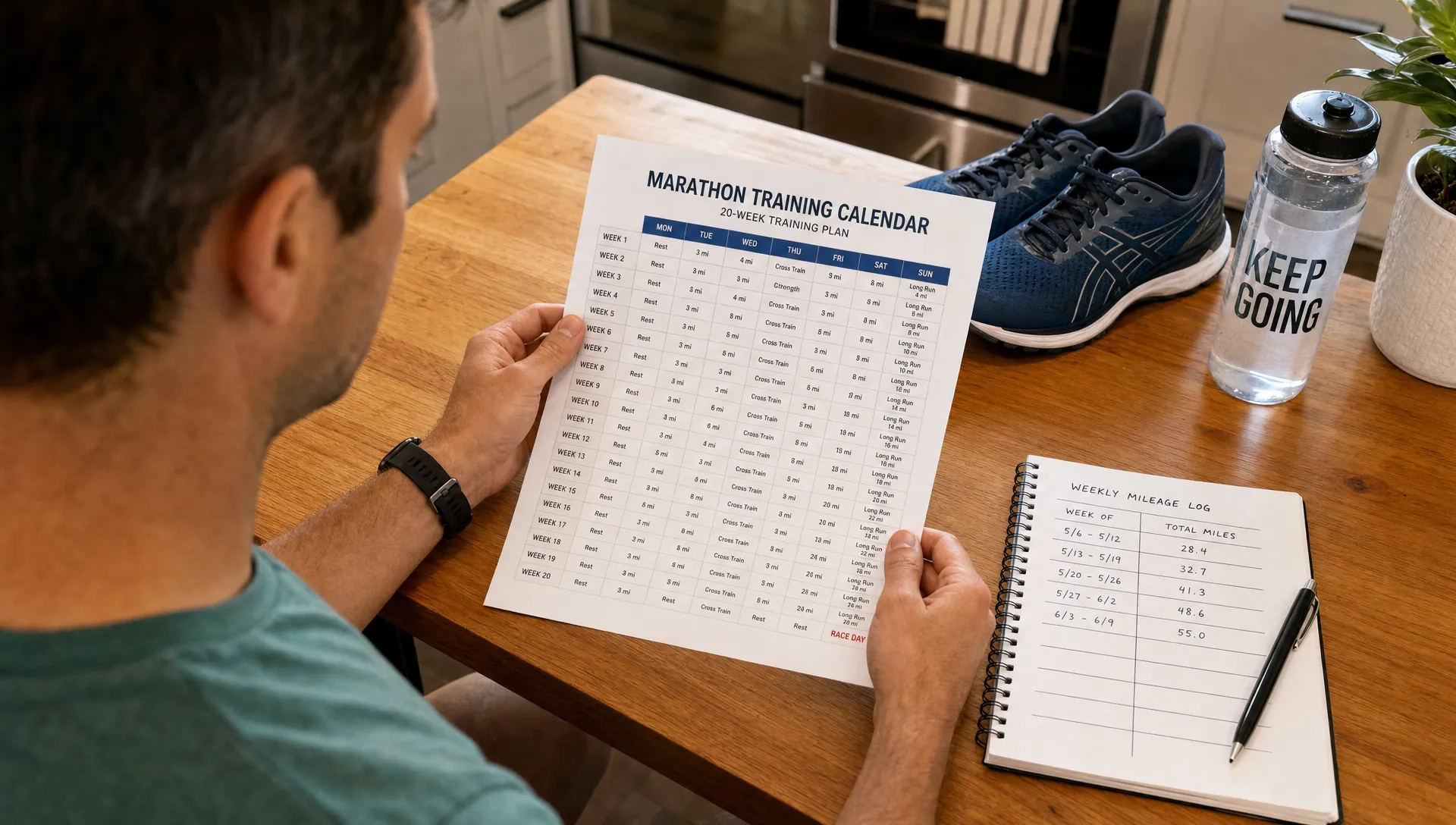
Check the balance of easy runs, workouts, and recovery
A strong marathon training plan should not make every run feel important in the same way. Different runs have different jobs.
Easy runs build aerobic capacity and help you handle more volume. Long runs develop endurance, fueling practice, and mental confidence. Workouts improve efficiency, speed, lactate threshold, and the ability to hold pace when tired. Recovery runs or rest days help you adapt.
A balanced plan will usually include:
- Mostly easy running
- One long run most weeks
- One or two quality sessions, depending on experience
- Recovery days after the hardest efforts
- A taper before race day
Decide how much structure you actually need
Some runners thrive with detailed instructions. Others prefer a flexible framework. Neither style is wrong, but the plan should match how you train best.
A highly structured plan may specify exact paces, workout formats, long-run segments, and recovery runs. This is useful if you have a clear time goal or enjoy precision.
A looser plan may focus on weekly mileage, long-run progression, and effort levels. This can work well if your goal is to finish, your schedule changes often, or you prefer running by feel.
The danger is choosing a plan that looks good but does not match your personality. If you dislike strict pace targets, a pace-heavy plan may create unnecessary stress. If you need accountability, a vague plan may leave too much room for skipped runs.
Ask yourself what you are more likely to follow for four months: a detailed prescription or a flexible guide.
Match workouts to your race goal
A marathon plan for finishing should not look the same as a plan for a personal best.
If your goal is to finish, the plan should prioritize gradual mileage, comfortable long runs, and time on feet. Some strides or short workouts can help, but you do not need to race every Tuesday.
If your goal is to run a specific time, the plan should include workouts that teach you to hold effort. Marathon-pace segments, steady runs, tempo intervals, and progression long runs can all be useful when placed correctly.
If your goal is ambitious, the plan should also include enough easy mileage to support the harder work. Many runners make the mistake of adding intensity without building the aerobic base to absorb it.
When in doubt, choose the plan that lets you complete workouts feeling challenged but not wrecked. Marathon fitness is built through accumulation, not hero sessions.
Consider recovery, readiness, and missed runs
A marathon plan is only effective if you can recover from it. That means your plan should leave room for sleep, nutrition, stress, soreness, and ordinary life.
A static plan may tell you to run 8 miles with intervals on Wednesday no matter what. But if you slept four hours, your resting fatigue is high, and the weather is dangerously hot, forcing that workout may not be smart.
A better approach is to adjust based on readiness. That does not mean skipping every run when you feel tired. It means understanding the difference between normal training fatigue and signs that you need to back off.
Watch for warning signs such as persistent soreness, declining performance at normal effort, irritability, poor sleep, unusual heaviness, or pain that changes your stride. If these appear, the right move may be to reduce intensity, move a workout, or take an extra recovery day.
This is one reason adaptive marathon training can be so helpful. The goal is not to make training easier. It is to make the stress more precisely timed.
Do not ignore terrain, weather, and race conditions
A plan should prepare you for the marathon you are actually running.
If your race is hilly, include hills during the build. If it is likely to be warm, practice effort-based pacing and hydration strategies in similar conditions when safe. If the race is flat and fast, marathon-pace rhythm becomes more important.
Weather also affects training quality. Summer marathon builds can make easy paces slower. Winter builds may require more flexibility around ice, storms, and treadmill days. A plan that adapts run timing around weather can help you complete key sessions with less unnecessary risk.
Do not judge your fitness by pace alone when conditions are difficult. Effort, heart rate, and recovery can be better indicators on hot, windy, or slippery days.
Plan your shoes before the peak weeks
The right marathon training plan also needs the right gear plan. Shoes that feel fine at week one may be worn down by week fourteen, especially if you are adding long runs and workouts.
At minimum, know which shoes you will use for easy runs, workouts, long runs, and race day. Many marathoners benefit from rotating at least two pairs so one shoe is not carrying every mile of the block. If you want a deeper breakdown, Treadly’s guide to marathon training shoe rotation explains how to plan pairs across a 16-week build.
Shoe mileage tracking matters because marathon training adds miles quickly. If you are not sure how to monitor wear, compare simple options in this guide to tracking running shoe mileage.
This is not just about saving money. Worn shoes can change how your legs feel late in the block, when fatigue is already high. A plan that includes shoe tracking and rotation helps you avoid discovering a dead pair two weeks before race day.
Look for fueling and race-practice opportunities
A marathon training plan should give you chances to practice race-day behaviors, not just running distance.
Long runs are the best place to test fueling, hydration, socks, shoes, clothing, pacing, and mental routines. If the plan never gives you steady long runs or marathon-pace segments, you may reach race day with unanswered questions.
You do not need to turn every long run into a race simulation. But during the second half of the plan, you should have some runs where you practice:
- Taking fuel at planned intervals
- Drinking while running or during brief stops
- Wearing the shoes and gear you may race in
- Starting conservatively and finishing controlled
- Running at goal marathon effort when appropriate
Know the red flags of a poor marathon plan
Some plans are popular because they look simple, not because they are well matched to you. Be careful if a plan has multiple red flags.
| Red flag | Why it matters |
|----------|----------------|
| The first week is much higher than your current mileage | You may overload your body before adapting |
| Every week increases with no cutback | Recovery is part of the training process |
| Too many hard days are close together | Fatigue can accumulate faster than fitness |
| The long run dominates the whole week | One run may carry too much stress |
| No taper before race day | You may arrive fit but too tired to perform |
| No flexibility for missed runs | Real life will eventually disrupt the calendar |
| Pace targets ignore weather or terrain | Effort can vary widely in different conditions |
A plan does not need to be perfect. It does need to be adjustable, progressive, and realistic.
A simple decision framework
If you are comparing several plans, use this final filter.
Choose the marathon training plan that meets these criteria:
- It starts near your current fitness.
- It supports your actual race goal.
- It fits your weekly schedule.
- It builds mileage gradually with recovery weeks.
- It includes long runs, easy runs, and appropriate workouts.
- It leaves room for missed runs, weather, and fatigue.
- It helps you practice fueling, pacing, and race-day gear.
- It is something you can imagine following consistently for months.
Frequently Asked Questions
How many weeks should a marathon training plan be? Most runners do well with 16 to 18 weeks, assuming they already have some running base. First-time marathoners or runners returning from a break may prefer 20 weeks or more, while experienced runners with strong fitness may use a 12-week plan.
What weekly mileage should I peak at for marathon training? It depends on your goal, experience, durability, and schedule. A first-time finisher may peak much lower than a runner chasing a personal best. Instead of copying someone else’s peak mileage, choose a plan whose peak week you can complete while still recovering well.
Should my marathon plan include speed workouts? Usually, yes, but the amount depends on your goal. Beginners may only need light strides, hills, or simple effort-based workouts. Time-goal runners often benefit from tempo runs, marathon-pace work, and structured intervals.
What should I do if I miss a long run? Do not automatically cram it into the next day or add the missed miles to another run. Look at the reason you missed it, your fatigue, and the next week of training. Often, it is better to adjust the plan than to force a risky catch-up week.
Is an adaptive marathon training plan better than a static plan? For many runners, yes. Static plans can work if your schedule, recovery, and conditions are predictable. Adaptive plans are helpful when training needs to respond to missed runs, readiness, weather, or completed workouts.
Build a marathon plan that can adapt with you
A marathon training plan should fit your body, your goal, and your real life. If you want a plan that adjusts instead of staying frozen on a calendar, Treadly can help.
Treadly builds adaptive running plans around your fitness, race goal, schedule, recovery, weather, and completed runs. It also supports shoe mileage tracking and shoe rotation, so your training and gear stay aligned through the full marathon block.
Start with a plan you can trust, then let it adapt as training unfolds.
HRV Training Adjustment Explainer
Use your HRV trend, sleep, and resting heart rate to decide whether today's run should stay hard, shift easier, or become recovery.
Heat Pace Adjustment Calculator
Estimate how much to slow your running pace in warm or humid conditions, with plain-language guidance for workouts and long runs.
Running Shoe Mileage Calculator
Estimate when your running shoes will hit their replacement target based on current mileage, weekly mileage, and rotation size.
Run with a plan that adapts
Treadly builds training around your goal, recovery, weather, and real life — with shoe tracking still built in.
Get Treadly — Free